Pitch Deck Storytelling: Why Decks Fail Before Slide 3
Artem Pochepetsky

Most founders assume investors lose interest somewhere in the middle of a pitch deck.
Perhaps the market slide feels too optimistic. The business model is not convincing enough. The competition slide creates questions. The traction is still early.
In reality, many decks lose the investor much sooner.
By the time the investor reaches slide three, they may already be confused about what the company does, unconvinced that the problem matters, or unsure why the solution deserves attention. These are some of the first things investors look for in a pitch deck, long before they begin evaluating every detail of the business. They might continue scrolling, but they are no longer reading with curiosity. They are looking for confirmation that their first doubts were correct.
This is usually described as a storytelling problem, although the word "storytelling" often creates the wrong impression. A pitch deck does not need a dramatic founder journey, emotional language, or a cinematic narrative.
It needs a clear investment argument.
After working on more than 400 pitch decks for founders across different industries and funding stages, we have noticed that the strongest decks are not necessarily the ones with the most impressive slides. They are the ones that make the investor understand the opportunity without having to assemble the logic themselves.
That is what pitch deck storytelling is supposed to do.
Pitch deck storytelling is investment logic in the right order
A pitch deck brings together many different types of information, from customer pain and product capabilities to market size, traction, competition, the business model, the team, and the fundraising plan. Each of those elements may be accurate on its own, but accuracy alone does not make the pitch convincing. The investor still needs to understand how the facts connect and why they add up to a venture-scale opportunity.
That means the deck must answer a sequence of connected questions. Why is the problem important enough to build a large company around? Why have existing solutions failed to address it? What does the founder understand that others may have missed? Why is this particular approach likely to win, and what evidence suggests that the team can execute? Pitch deck storytelling determines when and in what order those questions are answered.
When the sequence works, each slide provides the context needed to understand the next one, and the investment argument unfolds naturally. When it does not, even strong information can lose its impact. The product may appear before the problem feels important, the market may be introduced before the customer is clearly defined, and traction may be shown without explaining what it proves. The team may look experienced, but the investor may still struggle to understand why that experience matters for this particular business. All the expected slides can be present while the argument itself is still missing.
The first three slides establish how the investor will read everything else
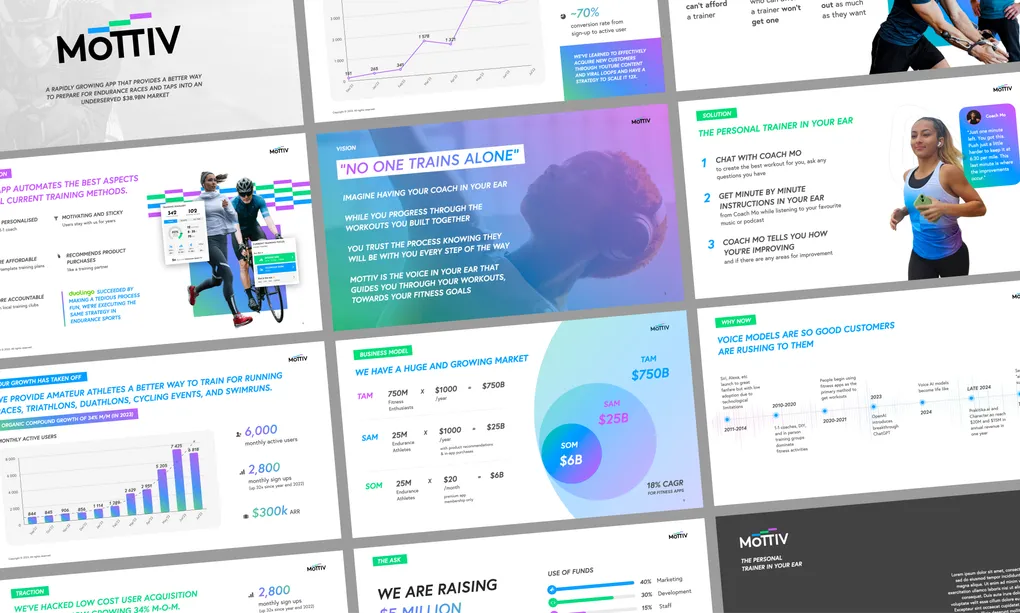
The first slides of a deck do not need to explain the entire business. They do, however, need to create orientation.
The investor should quickly understand three things:
1. What kind of company is this? At what stage?
2. What important problem or change is it built around?
3. Why might its approach be worth exploring?
This is why the opening matters so much. The investor is not yet evaluating every detail. They are deciding how much attention the opportunity deserves. A clear opening creates momentum. It gives the investor a reason to interpret later slides generously and explore the thesis further. A confusing opening does the opposite. It creates friction, and once that happens, every following slide has to work harder.
In my own fundraising experience, investor conversations rarely followed the deck from beginning to end. Once the problem, solution, and early traction were clear, investors usually had enough context to start testing the opportunity through questions. They already understood the risks that tend to appear at each stage, so there was rarely a need to walk through every market or roadmap slide in sequence. That does not make the later slides unnecessary. It means the opening has to give investors a clear enough frame for everything that follows.
The cover slide creates the frame
The cover slide is not simply a place for a logo and a broad tagline. It establishes the frame through which the investor will interpret the company, so it should provide enough context to understand what kind of business they are looking at from the beginning.
Consider a line such as, “AI-powered infrastructure for the future of commerce.” It sounds polished, but it leaves almost every useful question unanswered. What kind of infrastructure is being built? Which part of commerce does it address? Who uses the product, and what changes because the company exists? The investor should not have to wait several slides to understand the category.
A stronger cover line, such as “Automated supplier risk monitoring for global manufacturing teams,” does not explain every product feature, but it gives the investor a clear starting point. The user, function, and general business context are immediately visible, allowing the next slide to focus on why supplier risk has become an important problem rather than spending time clarifying what the company does. Clarity on the cover does not make the deck less interesting. It creates the foundation that allows the more compelling parts of the story to land.
The problem slide creates tension
A weak problem slide often begins with a broad inefficiency, such as, “Companies lose billions because of fragmented procurement processes.” The statement may be true, but it does not show where the pain occurs, who experiences it most directly, or why the company has a meaningful opportunity to solve it. The investor understands that the category has problems, but not yet what makes this particular problem urgent or investable.
A stronger version brings the investor closer to the customer’s actual experience: “Manufacturing teams often discover supplier delays only after production schedules are already at risk. The information exists, but it is scattered across emails, spreadsheets, logistics systems, and regional teams.” This version identifies the user, the specific point of failure, and the operational consequences. It gives the investor a situation they can understand rather than asking them to interpret a broad industry claim.
Numbers can then demonstrate the scale of the problem, but the context gives those numbers meaning. Data may prove that a problem is significant, while a concrete customer situation explains why it matters and where the opportunity to solve it begins.
The solution slide introduces the insight
The solution slide should not simply answer the problem with a list of product functions. Once investors understand the pain, they want to know what the company sees differently and why its approach has a better chance of working than the tools already available.
Compare “Our platform uses AI to automate supplier monitoring, risk analysis, alerts, and reporting” with “Instead of asking procurement teams to manually search for warning signs, we continuously combine operational, financial, and logistics data to identify supplier risk before it affects production.” The first version explains what the product includes, but the second shows how the customer’s situation changes because the product exists.
That distinction helps the investor connect the solution directly to the problem. Rather than appearing as a collection of features, the product feels like a deliberate response to the failure described on the previous slide.
For the broader structure, see our guide to the 10 slides every funded pitch deck has.
A deck should answer the investor’s next question
One of the simplest ways to improve pitch deck storytelling is to stop thinking about slides as separate sections. Instead, think about the question each slide creates. A strong problem slide might make the investor ask, “Why have existing tools failed to solve this?” The next slide should answer that question.
The solution slide may then create another: “Is this approach meaningfully different?” That leads naturally to the product, technology, or competitive advantage. Once the investor understands the differentiation, the next question may be, “Do customers actually want this?” At that point, traction becomes relevant.
This sequence creates forward motion. The investor keeps reading because the deck anticipates what they need to understand next. A weaker deck ignores that sequence and may move from the problem to a massive TAM number, then to the founding team, and then back to the product. Each slide may contain useful information, but the investor has to build the connections alone. Investors should evaluate your argument. They should not have to reconstruct it.
Pitch deck storytelling example: Information vs. Investment Story
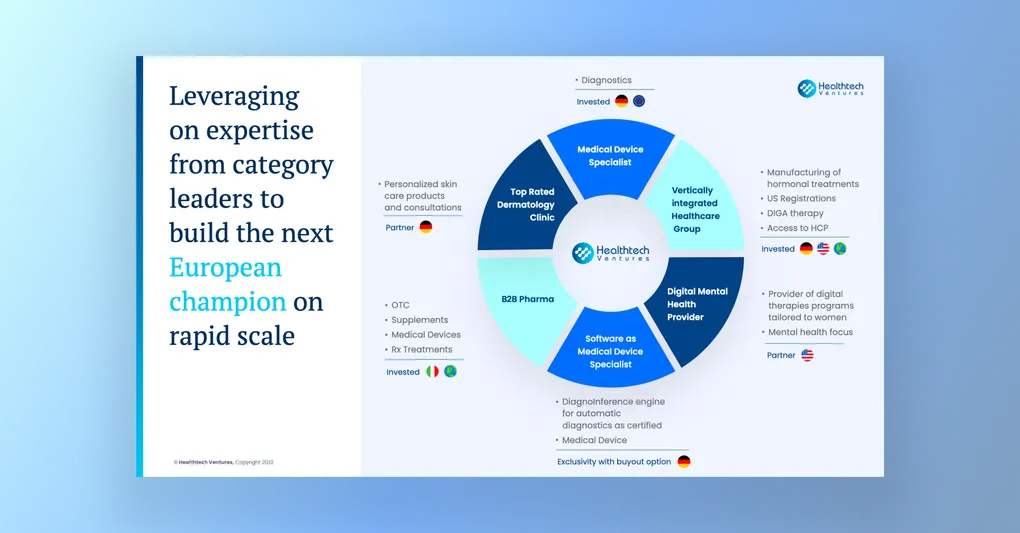
Imagine a startup building software for independent medical clinics.
Its deck contains the following slides:
- Clinics spend too much time on administration
- Our all-in-one clinic management platform
- A $60 billion healthcare software market
- Scheduling, billing, patient messaging, analytics, and automation
- Subscription pricing
- Experienced healthcare and technology team
There is nothing obviously wrong with the information. The problem is that it describes a category rather than presenting a specific investment thesis.
The same company could build its story around a sharper insight:
1. Independent clinics are losing staff time to administrative systems that do not communicate with one another.
2. The largest platforms were designed for hospital networks, making them expensive and difficult for smaller clinics to implement.
3. We are building a lightweight operating system designed specifically around the workflows of independent clinics.
4. Our first product automates the patient intake and billing handoff, where clinics currently lose the most time and revenue.
5. Early clinics are reducing administrative work by 35% and cutting average claim-processing time from seven days to four.
6. We are starting with 18,000 clinics in one specialty. At an average contract value of $1,999 per month and a realistic 5% market penetration, the initial SOM represents approximately $21.6 million in annual recurring revenue before expansion into adjacent segments.
Now the investor can see more than a software product. There is a defined customer, a clear reason existing solutions are inadequate, a focused market entry point, and evidence that the product creates value. Each piece supports the same argument. That is the difference between placing information into slides and building a pitch deck story.
Start with one investment thesis, not ten company messages
Many storytelling problems begin before the founder opens PowerPoint or Figma.
The founder tries to communicate everything that is impressive about the company:
- the technology is advanced
- the market is large
- the team is experienced
- the product has many applications
- customers can save money
- the platform can expand internationally
- the business may create a new category
Each point may be valid, but when they all compete for attention, the deck loses direction. A strong pitch deck is usually built around one central investment thesis.
For example:
A regulatory change has created an urgent compliance problem for mid-sized financial institutions, and our team has developed the first automated solution designed for their existing infrastructure. This thesis gives the deck a spine. The problem slide explains the regulatory and operational pressure. The solution explains the new approach. The market focuses on the institutions affected. The traction demonstrates urgency. The team proves domain credibility. The ask funds the milestones required to capture the opportunity fast.
Every slide performs a different function, but they all support the same reason to invest. Without a central thesis, the deck becomes a collection of positive statements about the company. Investors may like individual parts without understanding why the opportunity as a whole is compelling.
Use evidence where it changes the investor’s belief
Founders often treat evidence as something that belongs only on the traction slide. In reality, proof should appear at the moment an investor is most likely to question a claim. If the problem is urgent, support that urgency with customer behavior, regulatory deadlines, rising costs, broken processes, or a visible market shift. If customers are dissatisfied with existing solutions, show it through feedback, switching behavior, lost contracts, or clear product limitations. And if your approach works better, demonstrate the difference with a measurable outcome, pilot result, technical benchmark, or product demonstration. Even a large-market claim becomes more credible when it is connected to customer economics and a realistic path to revenue rather than presented as a global industry number.
Good storytelling is not about making unsupported claims sound more persuasive. It is about anticipating where skepticism will appear and placing the right evidence there before the investor has to ask for it. When proof arrives at the right moment, it strengthens the argument and helps the story move forward naturally. When it appears several slides later, the investor may already have rejected the premise it was supposed to support.
Your slide headlines should carry the argument
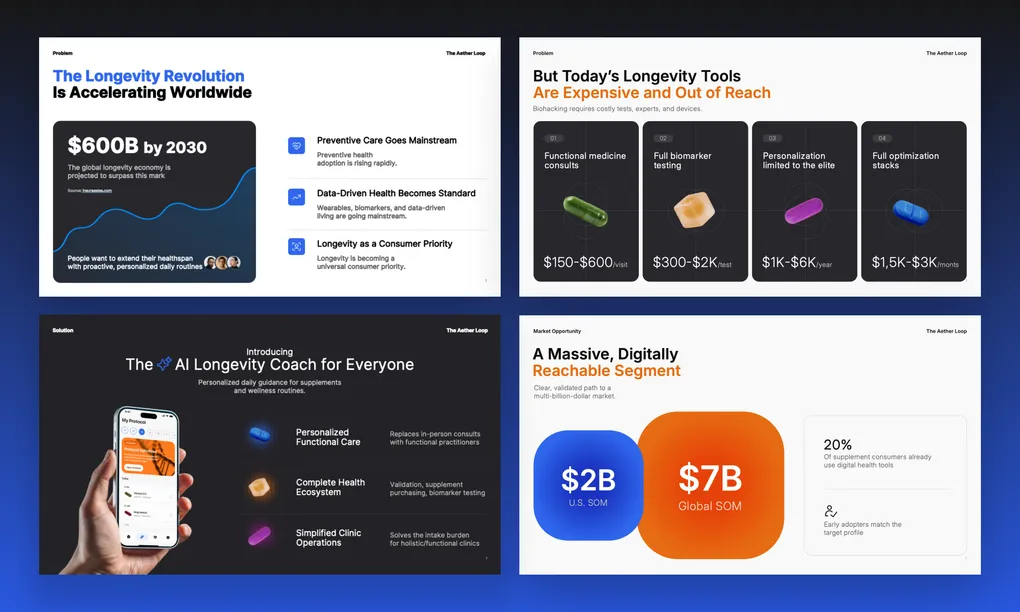
A useful test is to remove everything from the deck except the slide headlines. Investors often read the headline first and skim the rest, so the headlines should still communicate the core argument on their own.
Do they still tell the story?
More useful headlines might look like:
- Freight operators lose margin because route planning cannot react to real-time disruptions
- Existing tools optimize historical routes, not what is happening on the road now
- We rebuild delivery routes every five minutes as traffic, weather, and fleet capacity change.
- Our first customers are regional fleets of 50-300 vehicles, where a single delayed route can cost between $400 and $1,200.
- Three early pilots reduced empty mileage by 14% and improved on-time delivery from 82% to 93%.
- We are expanding from route optimization into a broader operating system for regional logistics
A person reading only these headlines can understand the basic investment logic. This does not mean every headline needs to be a long sentence. It means the headline should contribute to the pitch rather than simply label the slide.
Common signs that your pitch deck story is not working
You may have a storytelling problem if investors repeatedly ask basic questions that the deck was supposed to answer.
For example:
Investors understand the product but not the opportunity
They can explain what the software does, but they do not understand why the company could become large or why customers need it now.
This usually means the deck has focused on product functions before establishing the market change, customer pain, or strategic insight.
The market slide feels disconnected from the customer
The deck presents a large industry number, but the investor cannot see how the company reaches its first customers or expands from them.
The story needs a clearer connection between the initial use case and the larger market.
Traction appears impressive but does not strengthen the thesis
The deck may show revenue, partnerships, users, or pilots without explaining what those results prove.
Ten customers can be powerful evidence if they validate repeatable demand in a specific segment. Ten unrelated pilots may create less confidence if the company still has not identified its core market.
The team is credible but not obviously right for the company
Strong names and previous employers are not enough. The story should connect the team’s experience to the insight, customer, technology, or market being pursued.
The ask feels added at the end
The fundraising amount and use of funds should follow from the story.
If the company is raising capital to prove a new sales model, launch in a second market, complete regulatory approval, or convert pilot demand into recurring revenue, those milestones should be visible throughout the deck.
The ask should feel like the next logical step, not a separate financial request.
Storytelling changes depending on the funding stage
The underlying principle remains the same, but the type of evidence investors expect changes as the company develops.
At pre-seed, the story carries more weight because the company has limited performance data. Investors are evaluating the founder’s insight, understanding of the problem, early validation, founder-market fit, and ability to turn a thesis into a business. The deck should show what opportunity the founder sees that others may have overlooked and why this team is particularly well positioned to pursue it.
At seed, the story should explain what the company’s early traction actually proves. It is not enough to show that customers exist. The deck should clarify whether those customers indicate repeatable demand, what measurable value they receive from the product, and how the company can build on that initial traction to move closer to product-market fit.
At Series A, the story becomes more analytical. Investors expect stronger evidence, clearer economics, cohort performance, go-to-market efficiency, and a credible scaling plan. The question is no longer only why the company should exist, but whether its current model can scale and produce predictable growth.
A deck that ignores the company’s funding stage often feels unconvincing. A pre-seed startup may try to compensate for limited evidence with unrealistic projections, while a Series A company may rely too heavily on vision without clearly explaining its performance.
The strongest pitch deck presents the right type of proof for the company’s current stage of development.
We explain the stage-specific evidence in more detail in our guide to building a pitch deck for a pre-seed round.
Design supports the story, but cannot replace it
A well-designed deck makes the argument easier to understand. It directs attention, creates hierarchy, adds context, simplifies complex information, and helps the investor identify what matters on each slide. But design cannot decide what the investor should believe.
A visually impressive problem slide may still describe the wrong problem. A polished market diagram may still rely on weak assumptions. A beautiful product slide may still appear before the investor understands why the product is necessary. This is why pitch deck storytelling should be developed before the visual design is finalized. The founder first needs to define the investment thesis, determine the order of the argument, choose the necessary evidence, and remove information that does not support the story. Design can then make that thinking clear.
A practical pitch deck storytelling framework
Before designing the full deck, write one sentence answering each of these questions:
1. What has changed in the market or customer environment?
2. Who is experiencing the problem most intensely?
3. Why are current solutions failing them?
4. What insight led to your approach?
5. What does your product change for the customer?
6. What evidence suggests that the approach works?
7. Why is your team positioned to win?
8. How does the initial opportunity expand into a venture-scale business?
9. What will the current funding round allow the company to prove?
Then place the answers in an order that reflects how an investor would evaluate the opportunity. Read the sequence without design, charts, screenshots, or supporting paragraphs. Look for gaps. Does the solution rely on a problem that has not been established? Does the market appear large only because the customer is defined too broadly? Does traction support the business model or merely show activity? Does the raise connect to specific risk-reducing milestones? This process often reveals that the deck does not need more content. It needs a clearer argument and fewer distractions.
The investor should not have to search for the story
A pitch deck cannot make a weak business strong. It cannot create traction, fix the market, or replace a credible plan. What it can do is present the company’s strongest investment logic clearly and without distortion, helping the investor understand what has changed, who is experiencing the problem, why the company’s approach is different, what has already been proven, and what the next round of capital will unlock.
When that logic is clear from the beginning, the deck becomes easier to follow and easier to remember. When it is not, even a promising company can appear unfocused. Most decks do not fail because slide three contains the wrong chart. They fail because, by slide three, the investor still does not understand the central argument or see a compelling reason to continue exploring it.
That is the real purpose of pitch deck storytelling. It is not about making the company sound more dramatic. It is about structuring the opportunity so clearly that investors do not have to search through the slides, connect unrelated claims, or reconstruct the investment case themselves.
If you are unsure whether your deck communicates a clear investment story, book an intro call with 100PitchDecks.
We will help you identify where the narrative loses momentum, which parts of the argument need stronger evidence, where your arguments fail, and how to build a deck that gives investors a reason to keep reading.
Artem Pochepetsky is the founder of 100PitchDecks. He has worked on more than 400 pitch decks for founders across pre-seed through Series A, with clients raising a combined $250M+.